Service
Leaky Roof Repair
Active leak? We trace it to the actual source — not just the spot on your ceiling — and fix the underlying flashing, shingle, or penetration failure so it doesn't come back after the next storm.
The stain on your ceiling almost never marks where the roof actually failed. Water travels along rafters and decking before it finally shows up somewhere visible — often several feet from the real entry point — which is exactly why a quick patch over the stain itself so rarely solves anything.
What It Costs to Fix a Roof Leak
Leak repair costs fall into the same bands as general roof repair, scaled to how contained the problem is:
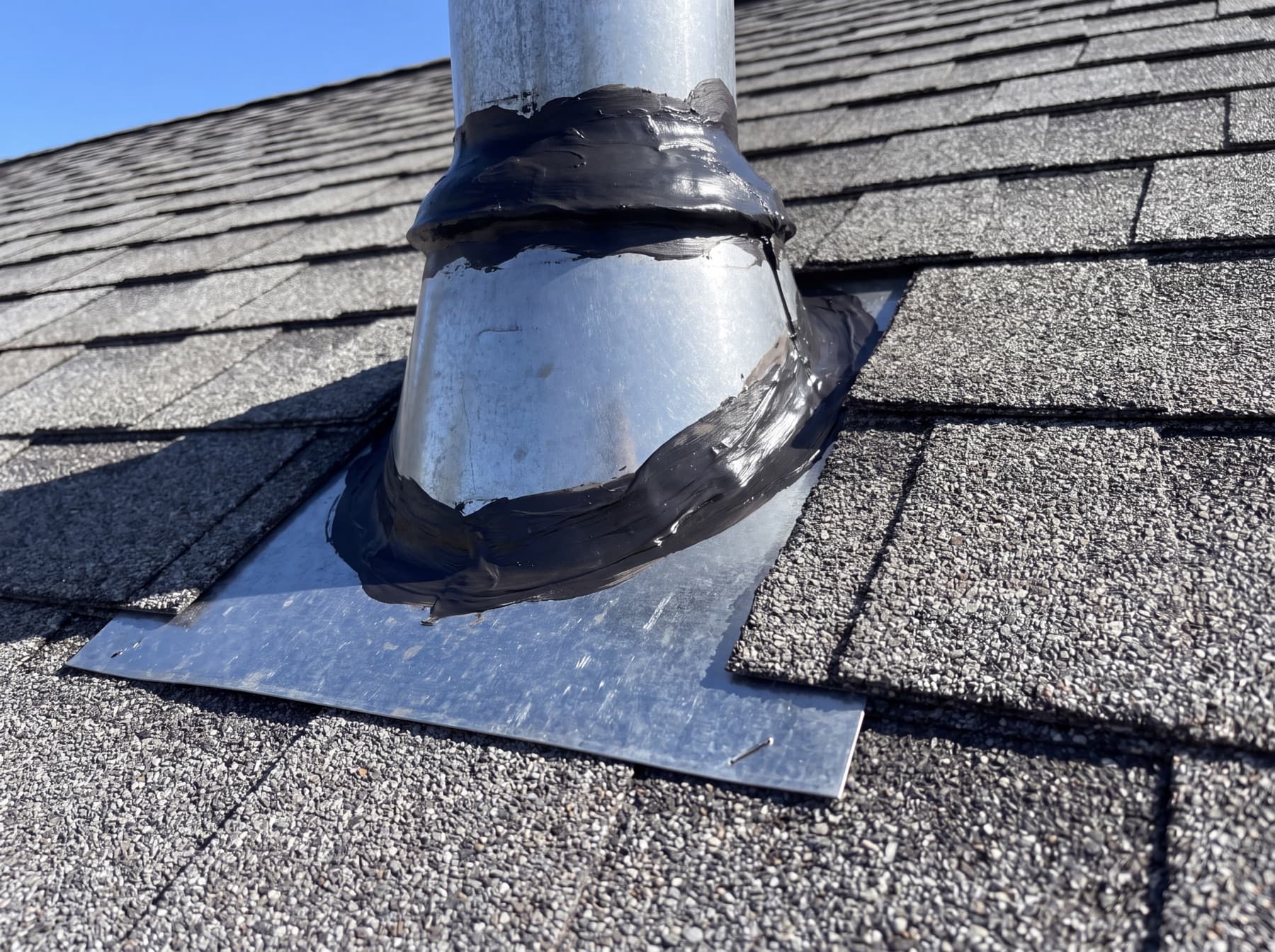
- A single, clearly located leak — a failed vent boot, a cracked pipe collar, a small area of lifted shingles — typically runs $150 to $1,000.
- Multiple leak points, or a leak that's been active long enough to spread, often requiring partial decking replacement, falls in the $1,000 to $3,000 range.
- Leaks that have caused structural damage — rotted decking or framing from water sitting for an extended period — can run $3,000 to $8,000 or more, since the job now includes rebuilding what the water damaged, not just stopping the leak itself.
Key takeaway
The difference between a $200 leak repair and a $3,000 one usually comes down to timing, not severity — caught early, it's a quick fix; left through a season or two of rain, it becomes a decking and framing repair. If a storm caused it and you're insured, get the damage documented before repairs start.
Signs You Have a Roof Leak
Some signs are obvious right away. Others show up somewhere else in the house entirely — which is exactly why leaks often go unnoticed until real damage has already been done:
- Water stains on ceilings or walls — brown, yellow, or rust-colored, usually spreading in an irregular shape rather than a sharp edge.
- Peeling paint or bubbling drywall, particularly where a wall meets the ceiling.
- A musty smell with no obvious cause — often the earliest sign of moisture trapped somewhere out of sight, well before it becomes visible.
- Visible daylight through the roof boards when checking the attic on a clear, sunny day.
- Dark streaks or moss on the roof itself — cosmetic on its own, but a sign of retained moisture that speeds up shingle wear and often points to a spot worth checking closely.
- Missing or curling shingles, granules collecting in the gutters, or damaged flashing after a storm.
Any one of these is worth a look on its own. More than one at the same time usually means the leak has been active for some time already.
Finding the Actual Source
Because water travels before it drips, the repair that actually matters traces the leak back to where it's entering the roof — a failed flashing seal, a cracked vent boot, a nail hole, or shingles lifted just enough to let wind-driven rain underneath. Sealing over the ceiling stain or the spot where water shows up almost never fixes the problem, since that's rarely where the roof itself gave out. A proper leak repair starts on the roof, not inside the house.
Is It an Emergency?
Active dripping indoors, water pooling on a floor, or a stain that's visibly growing in real time counts as an emergency — call right away, and in the meantime, contain what you can. A bucket under the drip, belongings moved out of the way, and a temporary tarp over the affected area (only if it can be placed safely) all help limit damage until someone arrives. Don't get on a wet or windy roof yourself to place a tarp — a leak that sits a few extra hours is recoverable; a fall isn't.
A slow, contained leak — a damp spot that isn't spreading, a musty smell with no visible water yet — still deserves a prompt call, but it's usually not a same-day emergency. The distinction mostly matters for triage: an active leak during a storm gets priority over a slow one that's held steady for a few days.
Insurance and Roof Leaks
Whether a leak is covered by homeowners insurance generally comes down to cause. Damage from a specific, identifiable event — wind, hail, a fallen limb — is typically covered above your deductible. Damage from gradual wear, deferred maintenance, or a roof already past its expected lifespan usually isn't, since insurance covers sudden loss rather than a roof's normal aging. If you suspect a storm caused or worsened a leak, photograph it before repairs start and before any cleanup — once that evidence is gone, it's much harder to establish that the timing lines up with a covered event.
Preventing Future Leaks
Most leaks trace back to a handful of predictable weak points, which means most are preventable with routine attention rather than luck. Clean gutters twice a year — clogged gutters back water up under the shingle edge and rot the eaves, a leak source that has nothing to do with the shingles themselves. Watch flashing around chimneys, vents, and skylights after storms, since flashing failure causes more leaks than worn shingles do in most cases. Keep overhanging branches trimmed back so they're not dropping debris into valleys or holding moisture against the roof. And when a small issue turns up — a lifted shingle, a cracked pipe boot — treat it as the $150–$300 fix it is now rather than the $3,000 one it becomes after another season of rain finds its way through.
Where We Offer Leaky Roof Repair
What Homeowners Look For
A few things customers consistently tell us matter most.
Frequently Asked Questions
Ready to get this fixed?
Call now or request a free estimate — we'll get back to you fast.