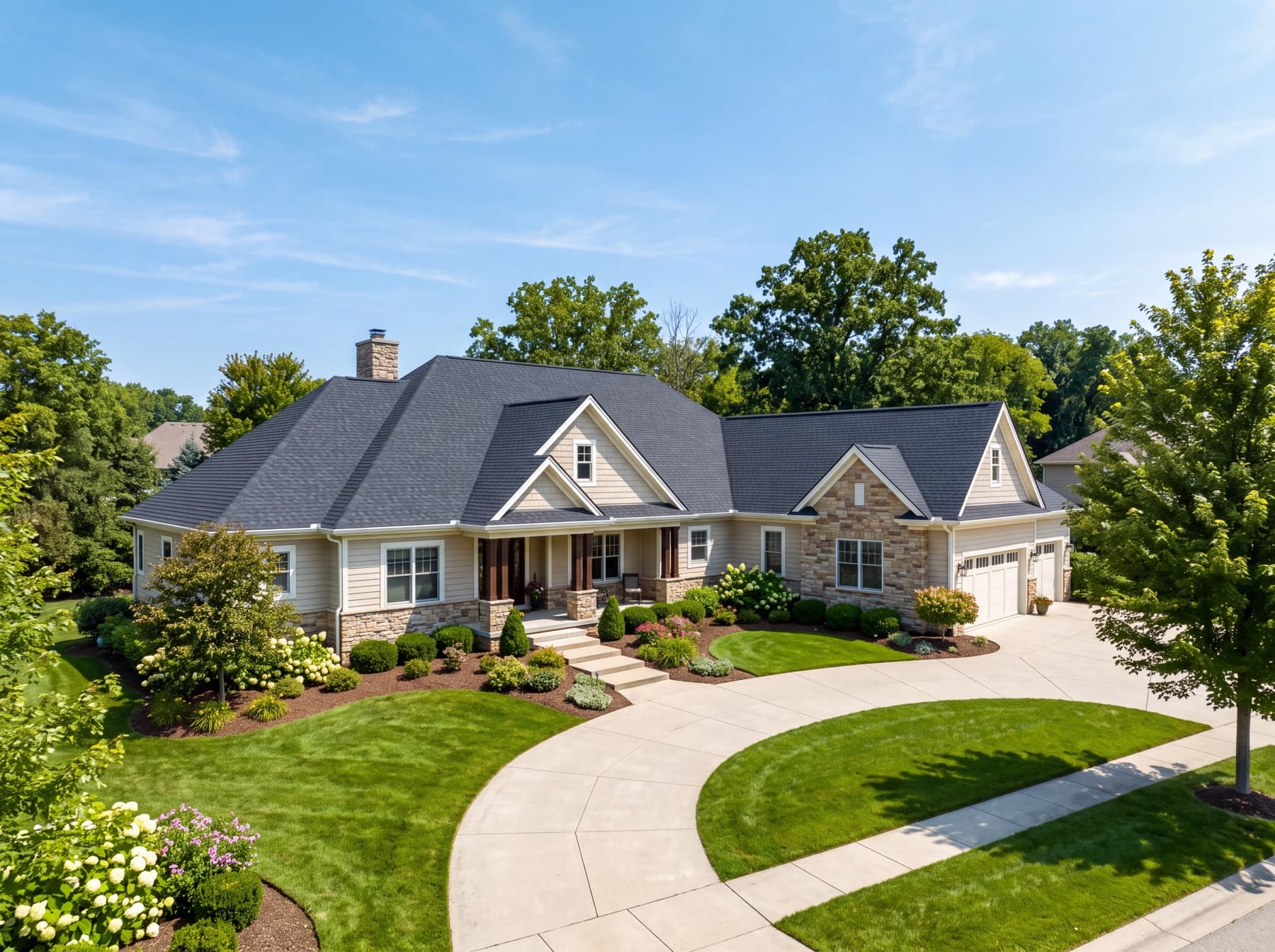
Service
Roof Installation
Full roof replacement and new installation for homes that are past the point of another patch — tear-off, decking repair, underlayment, and a new shingle or metal roofing system installed to code.
Most roofs don't fail on any particular date. They degrade slowly for years, then give out all at once in a storm that wouldn't have caused a problem five years earlier. So when the question is how long a roof lasts, or what a replacement costs, the real answer starts with material — and the figures below reflect field performance, not just the number printed on the shingle warranty.
How Long Does a Roof Actually Last?
Expected lifespan swings widely depending on material:
| Material | Expected Lifespan |
|---|---|
| 3-tab asphalt shingles | 15–20 years |
| Architectural (dimensional) shingles | 25–30 years |
| Designer/luxury shingles | 30–40 years |
| Standing seam metal | 40–70 years |
| Corrugated/exposed-fastener metal | 25–40 years |
| Wood shingles/shakes | 30–50 years |
| Clay or concrete tile | 50–100 years |
| Natural slate | 75–150+ years |
These ranges largely come from manufacturer testing under controlled conditions. Actual performance tends to sit toward the lower end once real weather, attic ventilation, and installation quality enter the picture — two shingle roofs put on the same year, on the same street, can age a decade apart depending on how well the attic vents and how carefully the flashing was installed.
Key takeaway
A "30-year" shingle typically performs closer to 25 years once installed — that figure comes from warranty terms, not tested field results. Poor attic ventilation, more often than storm damage, is what actually shortens a roof's life.
What actually shortens a roof's life more than the material choice itself:
- Poor attic ventilation. A poorly vented attic can hit 150°F in summer, cooking shingles from underneath while the sun works on them from above. In winter, that same trapped moisture condenses on the roof deck and leads to rot. This is the leading cause of early roof failure, more than any single storm.
- Installation shortcuts. A roof system involves roughly 30 individual components — underlayment, ice-and-water shield, flashing, starter strips, ridge caps — with shingles making up only the visible layer. Skipping or cutting corners on any one part weakens the whole system, even when the shingles themselves look fine.
- Roofing over an existing layer instead of a full tear-off. It saves money upfront and most codes allow one layer, but it traps heat, hides decking problems you can't see from above, and shortens the new roof's actual service life.
- Overhanging trees. Some shade helps by keeping shingles cooler. Branches that drop debris and hold moisture against the roof do more harm than the shade helps — keep them trimmed back several feet from the roofline.
What a New Roof Costs
Full replacement runs $4 to $11 per square foot installed — around $8,000 to $22,000 for a typical 2,000-square-foot roof, with material choice accounting for most of that range:
| Material | Cost per sq ft | Typical lifespan |
|---|---|---|
| Asphalt shingles | $1–$1.20 (material only) | 15–30 years |
| Synthetic | $5–$12 | 25–50 years |
| Metal shingles/shakes | $6–$16 | 40–70 years |
| Wood shingles/shakes | $6–$15 | 30–50 years |
| Clay or concrete tile | $10–$20 | 50–100 years |
| Slate | $10–$30 | 75–150+ years |
Labor generally makes up more than half the total cost — professional crews run $40 to $90 per hour per worker, and that figure rises with roof pitch, added complexity like chimneys or skylights, and whether the old roof has to be torn off and hauled away first. A steep pitch alone can add $1,000 to $3,000 compared to a simple roof of the same size.
How to Choose a Roofing Company
Price matters, but it shouldn't be the deciding factor on a project this size — a roof installed poorly ends up costing more within a few years than a somewhat higher bid costs today. Before signing with anyone, it's worth confirming:
- License and insurance, both. Ask specifically about general liability coverage, not just a business license — a legitimate contractor provides proof without hesitation.
- An actual on-roof inspection before quoting. Someone should check your decking, flashing, and attic ventilation in person before pricing the job. A number based on a satellite image is a guess, not an estimate.
- A written, itemized estimate covering materials, full scope, and whether any of the work is subcontracted — not a single lump sum.
- References you can call directly. A contractor doing good work has customers willing to vouch for it.
- Reasonable payment terms. Full payment upfront is a warning sign — a fair schedule ties payment to work that's actually been completed.
- A clear explanation of warranty coverage, including the difference between the manufacturer's material warranty and the contractor's own workmanship warranty, and who to call if something goes wrong later.
It's worth the extra time to get this right. The roof going on your home will outlast the crew installing it by decades — vet them properly before the tear-off starts.
The Installation Process
A full replacement follows roughly the same sequence no matter which material goes on:
- Tear-off. The existing roof — shingles, underlayment, flashing — comes off down to bare decking. This is when hidden problems (rotted decking, old water damage, prior animal intrusion) finally become visible, which is exactly why roofing over an existing layer instead of a full tear-off hides issues rather than solving them.
- Decking inspection and repair. Any damaged or rotted decking gets replaced before anything new goes down. Skipping this to save money is the most common shortcut behind roofs that fail well before their expected lifespan.
- Underlayment and ice-and-water shield. Synthetic underlayment covers the whole roof, with extra ice-and-water membrane in valleys, around penetrations, and along eaves — the areas most prone to water intrusion.
- Flashing, starter strips, and the roofing material. New flashing goes in around chimneys, vents, and skylights, then shingles, metal panels, or tile are installed to the manufacturer's spec, not a generic approach applied the same way to every material.
- Ridge caps, ventilation tie-in, and a final walk-through. The ridge gets capped, ventilation components are connected and confirmed working (not just present), and the finished roof gets checked before cleanup.
- Cleanup and haul-away. Old material and debris cleared from the property, gutters and yard checked for stray nails.
A straightforward tear-off and reshingle on an average home takes one to two days. Larger roofs, steeper pitches, or added complexity — multiple valleys, skylights — can push that to three or four.
Permits and Warranties
Most municipalities require a permit for a full roof replacement, and a reputable contractor handles that as part of the job instead of leaving it to you — unpermitted roof work can complicate a future home sale or insurance claim down the road. On warranties, expect two separate things: a manufacturer's warranty covering material defects, and a workmanship warranty from the contractor covering their own installation. They're not interchangeable, and a "lifetime" material warranty is typically prorated after the first several years and covers materials only, not labor — worth confirming what's actually covered before assuming a warranty protects the roof fully for its entire expected life.
Where We Offer Roof Installation
What Homeowners Look For
A few things customers consistently tell us matter most.
Frequently Asked Questions
Ready to get this fixed?
Call now or request a free estimate — we'll get back to you fast.